
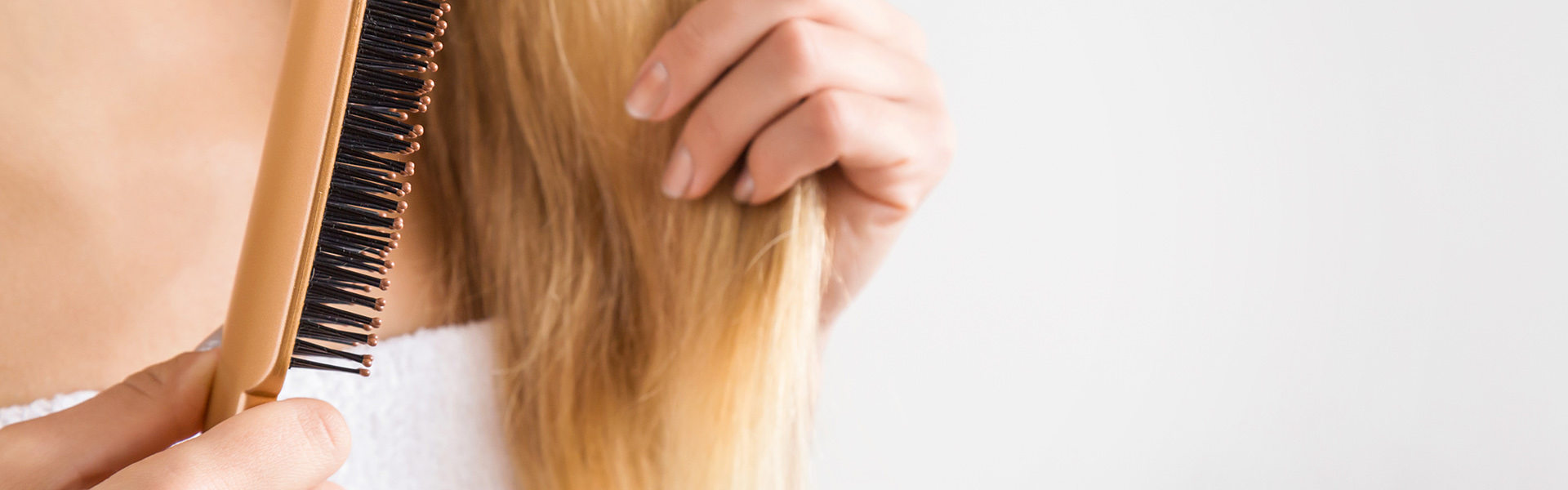
Split Ends
Svrbež vlasišta, perutanje i rane na vlasištu simptomi su uzrokovani peruti. Ovo se stanje događa kada vlasište postane previše suho ili previše masno. Vlasište tada proizvodi bijele ljuskice mrtve kože koje se nakupljaju u kosi i padaju na ramena. Iako je pojava bijelih ljuskica na odjeći sama po sebi uznemirujuća, crvenilo vlasišta i svrbež mogu biti posebno neugodni. To stvara začarani krug jer svrbež dovodi do češkanja, što može dodatno iritirati kožu, uzrokujući osip vlasišta ili čak rane. Perut može biti bezopasna u većini slučajeva, ali može imati značajan učinak na samopoštovanje. Posebno pojačana perut također može biti znak ozbiljnog stanja.
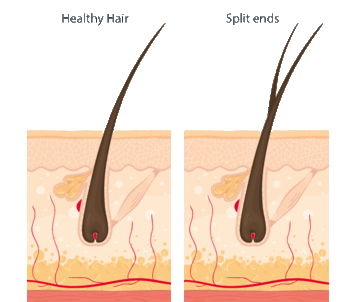
The Branch is the most common type, whereby the hair end resembles a tree branch. The cortex is still mostly intact, but parts are splitting away. This type of hair breakage indicates a need for more moisture. A special hair repair mask could help to reverse the damage.
The Fork describes a split into three and is indicative of more advanced hair damage. However, nourishing hair masks could prevent the development of more split ends.
The Treeis a type that not only affects the tip but the length of the hair. Here, several “branches” split away from the cortex creating a frayed look. These need to be trimmed quickly to prevent damage extending along the whole hair. The Candle describes hairs that thin out towards the tips, caused by significant damage to the outer cuticle. These split ends also need to be trimmed and removed.

Split ends are often a sign of overtreated, damaged hair, giving your hair an unkempt, unhealthy appearance. However, environmental and nutritional factors can also play a significant role.
Physical damage is the most common cause of split ends. This includes drying with coarse towels, rough brushing, backcombing, and styling with heat, e.g., using dryers, curling irons or straighteners.
Chemical damage is also widespread. Perming, chemical relaxing, colour treatments, and bleach can all contribute to hair damage, as can using the wrong hair care products for your specific hair type.
Furthermore, exposure to environmental influences, e.g., such as direct sunlight, strong winds, and salt water, is a factor when it comes to split ends. Of course, the way we nourish our bodies also affects the condition of our hair; an unbalanced diet can make it more susceptible to damage.

Fortunately, a few small changes can make a large difference when it comes to preventing split ends. Firstly, it is important to use products formulated to nourish and strengthen the hair. Such shampoos, conditioners and masks can help to prevent split ends from forming by moisturizing and smoothing the hair.
Be gentle with your hair, especially when wet. Do not wring water out of wet hair or rub it with a coarse towel to dry.
Allow your hair to air dry whenever you can, as hair dryers can be very tough on our hair.
You should avoid rigorous brushing and use a wide-tooth comb to detangle instead.
It is also advisable to use hair-friendly accessories, avoiding rubber bands or bands with metal parts. Finally, it is imperative to cut your hair regularly in order to avoid damage and split ends.
Suha i oštećena kosa